MAIZE PRODUCTS
Drought is one of the major abiotic stresses limiting maize production in South Africa. Climate change is predicted to worsen the situation with rainfall that is more variable and above average temperatures. Identifying ways to mitigate and adapt to climate change is fundamental to realising food security and improved livelihoods in South Africa and the rest of the continent. MbeuGenes sells maize open-pollinated varieties (OPVs) and, both conventional and genetically modified hybrids with multiple stress tolerance to drought, low soil nitrogen, etc.
Open-pollinated varieties
ZM1423 is an early-to-intermediate maturing, white-grained open-pollinated variety (OPV) with good tolerance to moderate drought and low soil nitrogen, good resistance to cob and leaf diseases, and excellent standability. It is suitable for dryland conditions.
ZM1523 is an intermediate-to-late maturing, white-grained open-pollinated variety (OPV) with good tolerance to moderate drought and low soil nitrogen, good resistance to cob and leaf diseases, and excellent standability. It is suitable for dryland conditions.
Conventional hybrids

WE3128 is an intermediate to late maturing, white-grained three-way hybrid with good tolerance to moderate drought and low soil nitrogen, good resistance to cob and leaf diseases, and excellent standability. It is suitable for dryland conditions.

WE4143 is an intermediate to late maturing, white-grained three-way hybrid with good tolerance to moderate drought and low soil nitrogen, good resistance to cob and leaf diseases, and excellent standability. It is suitable for dryland conditions.
WE4143 is an intermediate to late maturing, white-grained three-way hybrid with good tolerance to moderate drought and low soil nitrogen, good resistance to cob and leaf diseases, and excellent standability. It is suitable for dryland conditions.

WE4145 is an early-to- intermediate maturing, white-grained three-way hybrid with good tolerance to moderate drought and low soil nitrogen, good resistance to cob and leaf diseases, and excellent standability. It is suitable for dryland conditions.
WE6115 is an early maturing, white-grained three-way hybrid with good tolerance to moderate drought and low soil nitrogen, good resistance to cob and leaf diseases, and excellent standability. It is suitable for dryland conditions.
WE6117 is an early maturing, white-grained three-way hybrid with good tolerance to moderate drought and low soil nitrogen, good resistance to cob and leaf diseases, and excellent standability. It is suitable for dryland conditions.
Genetically modified (GM) hybrids
Stalkborer is a permanent problem in maize production in South Africa and can result in reduced grain yield and quality particularly if there is no chemical control. Stalkborer is also associated with Fusarium ear rots that can result in reduced yield quality and mycotoxin contamination. The Fall Armyworm (FAW) invaded South Africa since January 2017, after reports of invasion in West and Central Africa. This invasive pest is a new challenge in maize production and it is very difficult to control with pesticides. The easiest and most cost-effective way to control stalkborer and fall armyworm is to plant Bt (MON89034) maize hybrids.
WE6206B is a GM white-grained single-cross hybrid with Bt (MON89034) for stem borer and fall armyworm protection. It is of early-to-medium maturity with good tolerance to moderate drought and low soil nitrogen, good resistance to cob and leaf diseases, and excellent standability. It is suitable for dryland conditions as well as for both green mealies and grain.
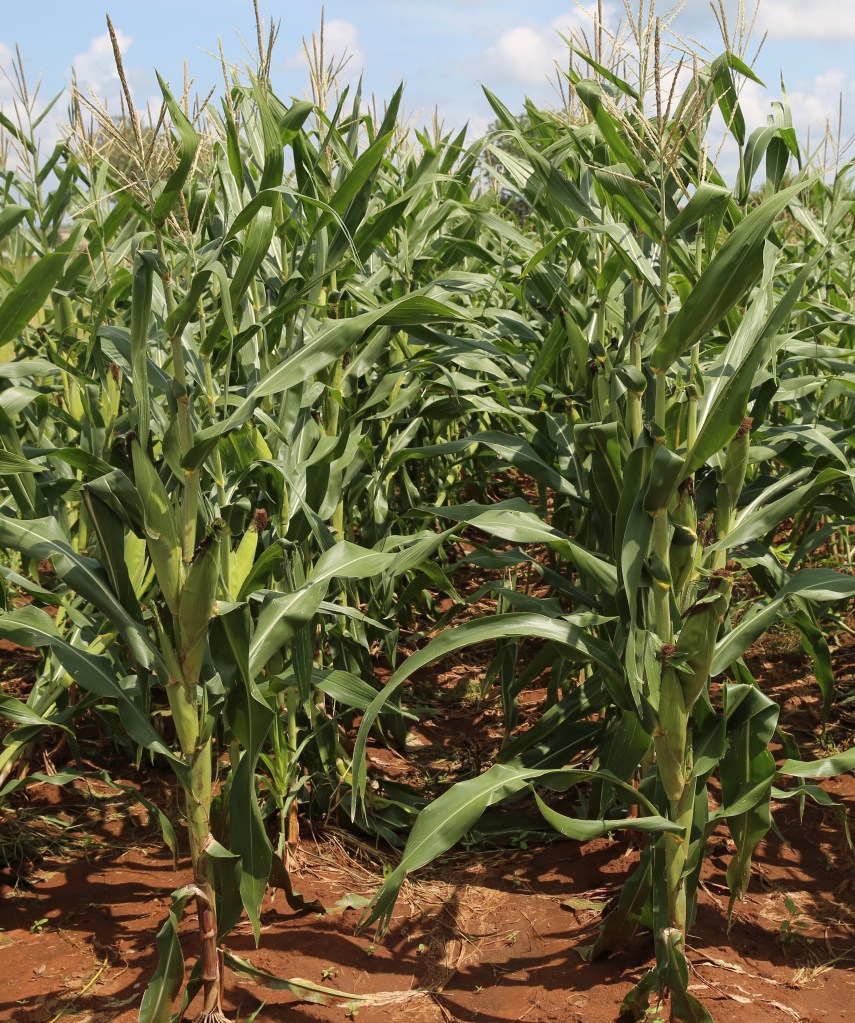
WE6208B is a GM white-grained single-cross hybrid with Bt (MON89034) for stem borer and fall armyworm protection. It is of early-to-medium maturity with good tolerance to moderate drought and low soil nitrogen, good resistance to cob and leaf diseases, and excellent standability. It is highly prolific and gives stable yields under dryland conditions.
WE6209B is a GM white-grained single-cross hybrid with Bt (MON89034) for stem borer and fall armyworm protection. It is of early-to-medium maturity with good tolerance to moderate drought and low soil nitrogen, good resistance to cob and leaf diseases, and excellent standability. It is suitable for dryland conditions.
GROUNDNUT PRODUCTS
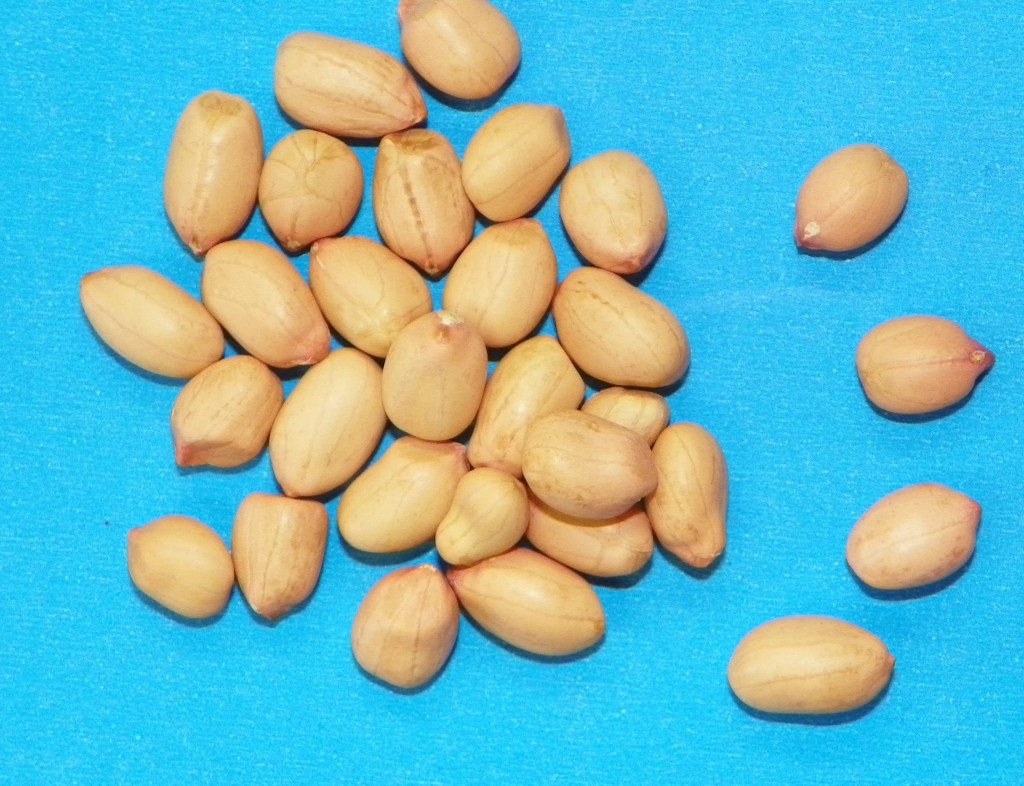
Tufa
Traits:
• Intermediate oleic acid content (54.6%) for improved shelf life of groundnut products
• Medium maturity (± 150 days)
• Upright Spanish bunch growth type
• Two-seeded pods (± 72%)
• Tan coloured kernels
• ± 95% round kernels (5/6, 6/7 and 7/8)
• Tolerant to early and late leaf spots, Phoma, rust and black pod
• Suitable for both irrigation and dryland conditions
• Yield potential: 4.3 t/ha under irrigation and 3.0 t/ha under dryland conditions
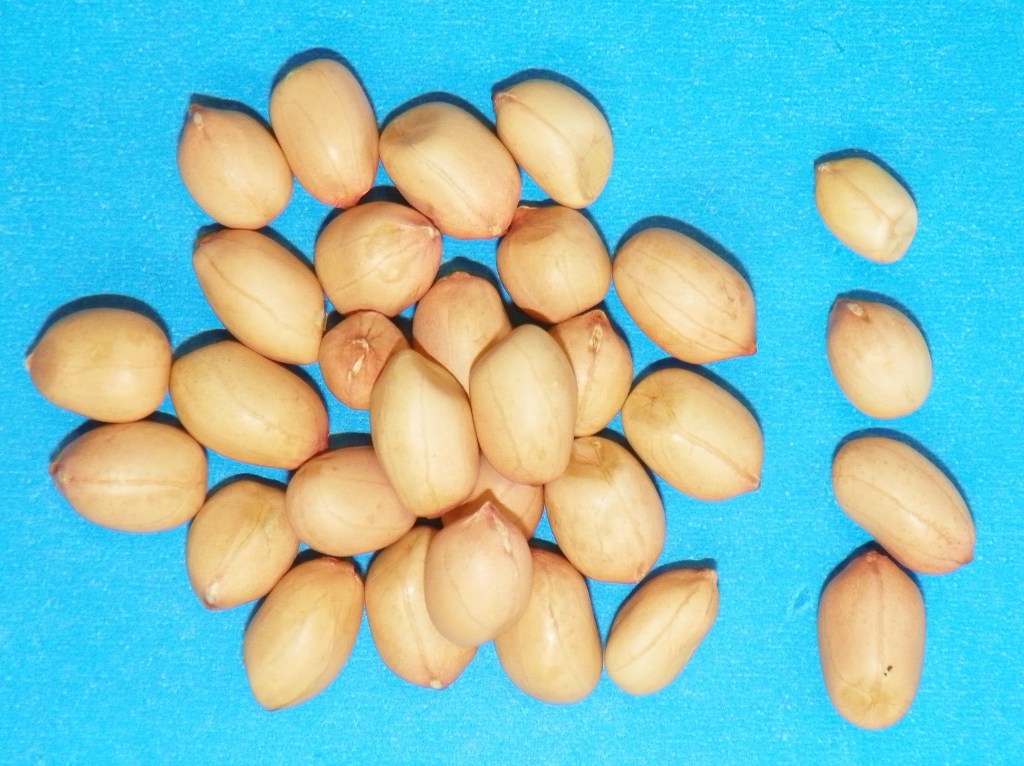
Akwa
Traits:
• Low-oleic acid content (40.7%)
• Medium maturity (± 150 days)
• Upright Spanish bunch growth type
• Two-seeded pods (± 80%)
• Tan coloured kernels
• ± 90% round kernels (5/6, 6/7 & 7/8)
• Tolerant to early and late leaf spots, Phoma and rust
• Suitable for both irrigation and dryland conditions
• Yield potential: 3.7 t/ha under irrigation and 2.3 t/ha under dryland conditions
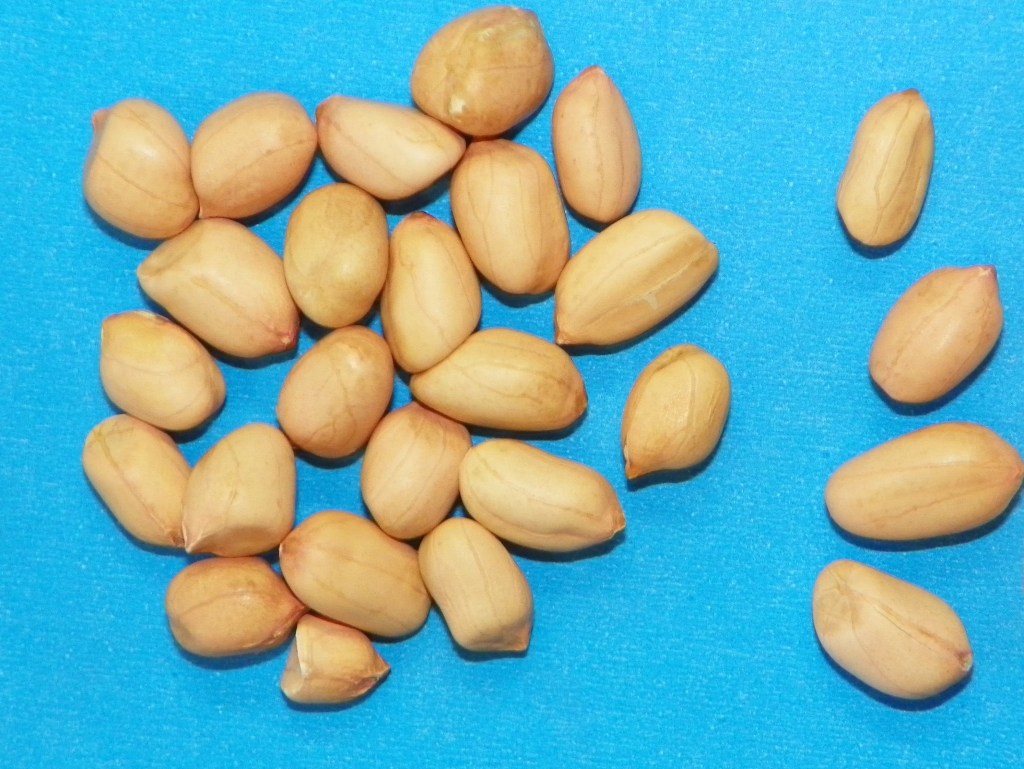
Anel
Traits:
• Low-oleic acid content (37.1%)
• Medium maturity (± 150 days)
• Upright Spanish bunch growth type
• Two-seeded pods (± 82%)
• Tan coloured kernels
• ± 85% round kernels (5/6, 6/7 & 7/8)
• Tolerant to early and late leaf spots, Phoma, rust and black pod rot
• Suitable for both irrigation and dryland conditions
• Yield potential: 4.3 t/ha under irrigation and 3.2 t/ha under dryland conditions

ARC-Opal 1
Traits:
• Low-oleic acid content (39.1%)
• Medium maturity (± 150 days)
• Upright Spanish bunch growth type
• Two-seeded pods (± 80%)
• Tan coloured kernels
• ± 91% round kernels (5/6, 6/7 & 7/8)
• Tolerant to early and late leaf spots, Phoma, rust and black pod rot
• Suitable for both irrigation and dryland conditions
• Yield potential: 3.8 t/ha under irrigation and 2.4 t/ha under dryland conditions

Kwarts
Traits:
• Low-oleic acid content (39.3%)
• Medium maturity (± 150 days)
• Upright Spanish bunch growth type
• Two-seeded pods (± 70%)
• Tan coloured kernels
• ± 90% round kernels (5/6, 6/7 & 7/8)
• Tolerant to early and late leaf spots, Phoma, rust and black pod rot
• Suitable for both irrigation and dryland conditions
• Yield potential: 3.4 t/ha under irrigation and 2.3 t/ha under dryland conditions

ARC-SelliePLUS
Traits:
• Low-oleic acid content
• Medium maturity (± 150 days)
• Upright Spanish bunch growth type
• Two-seeded pods
• Tan coloured kernels
• Round kernels
• Tolerant to early leaf spot, Phoma and rust
• Suitable for both irrigation and dryland conditions
• High yield potential
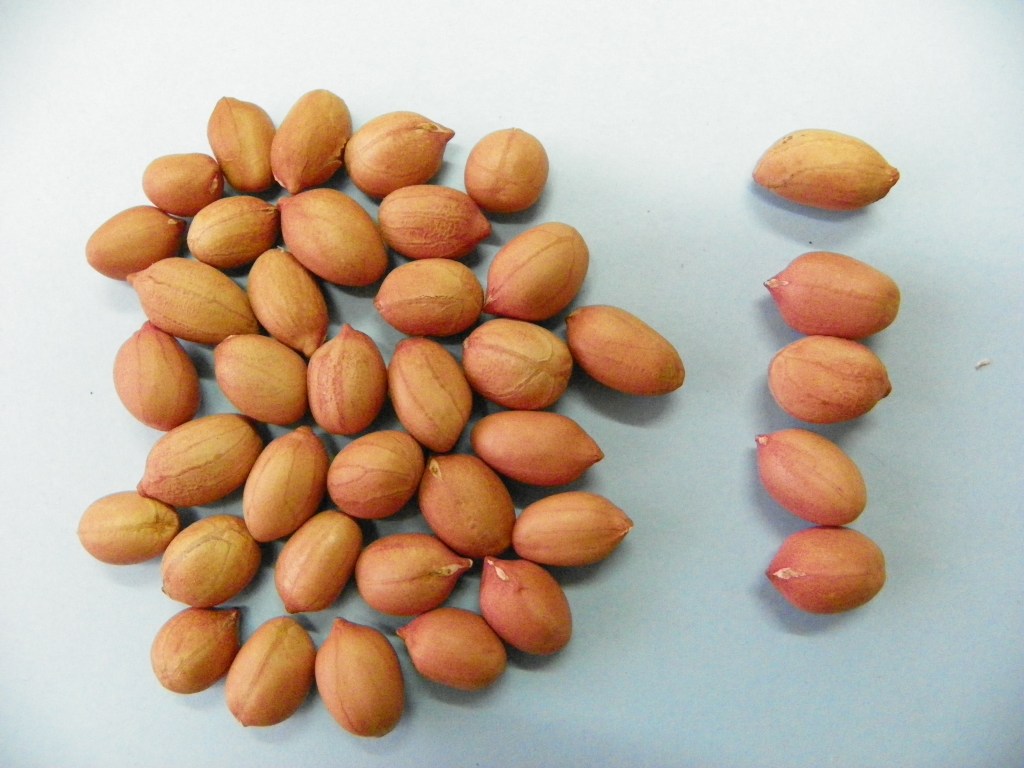
ARC-AkwaPLUS
Traits:
• Low-oleic acid content
• Medium maturity (± 150 days)
• Upright Spanish bunch growth type
• Two-seeded pods
• Tan coloured kernels
• Round kernels
• Tolerant to early leaf spot, Phoma and rust
• Suitable for both irrigation and dryland conditions
• High yield potential

ARC-Oleic 2
Traits:
• High oleic acid content (78.8%) for improved shelf life of groundnut products
• Medium maturity (± 150 days)
• Upright Spanish bunch growth type
• Two-seeded pods (± 79%)
• Tan coloured kernels
• ± 95% round kernels (5/6, 6/7 & 7/8)
• Tolerant to early and late leaf spots, Phoma and rust
• Suitable for production under irrigation
• Yield potential: 3.5 t/ha under irrigation
 MbeuGenes